
Tubular Motor Buying Guide: Types, Uses, Installation & Pricing
Everything you need to know about tubular motors — from how they work and where they are used to installation, motor types and choosing the right system for your space.

Need the Right Motor for Your Project?
Get expert help choosing the right torque, tube size and control option for your system.
Get a Free Quote →

01 OVERVIEW
Introduction
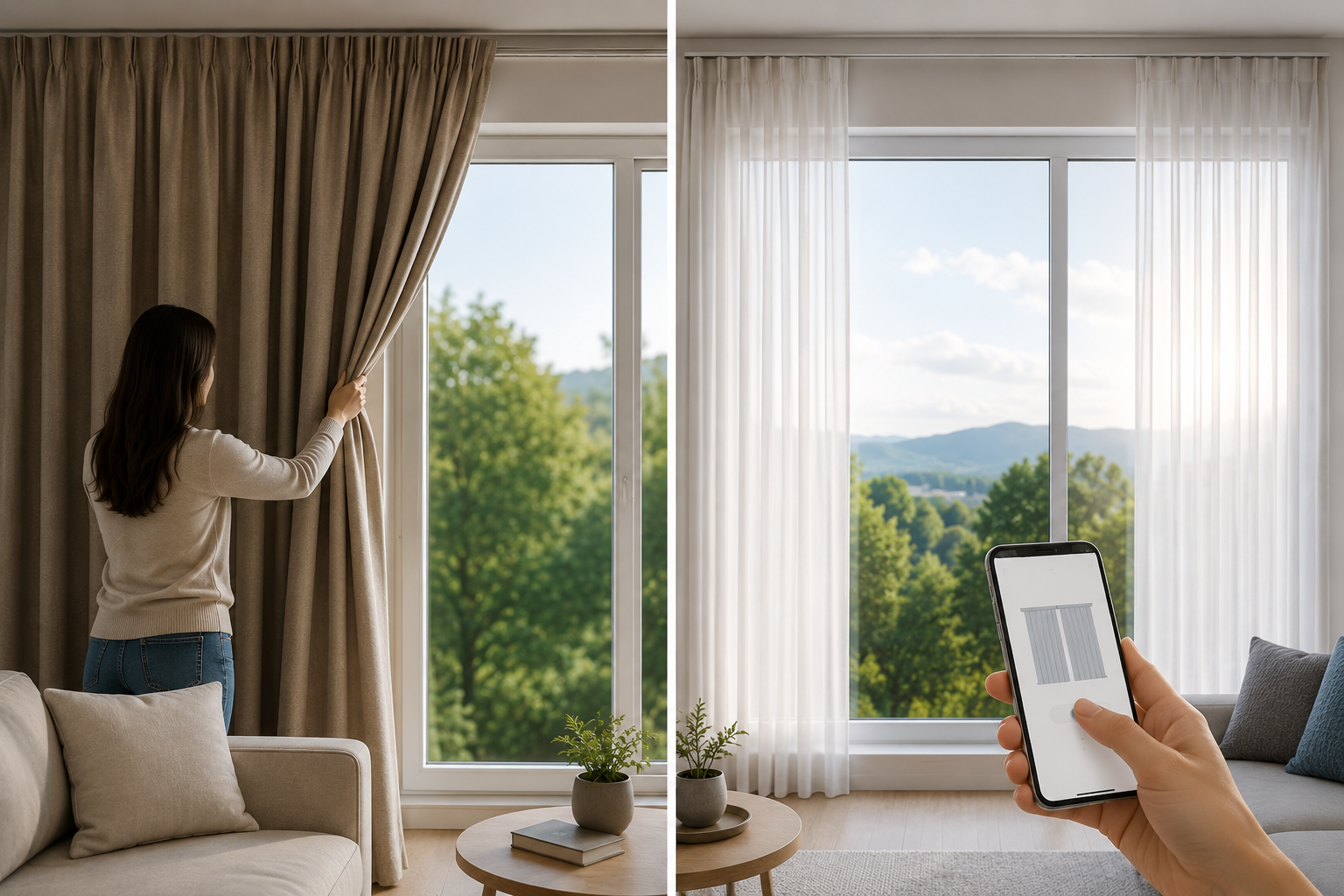
Walk into a modern automated home and you probably won’t see the motor working. That’s because a tubular motor is usually hidden inside the tube of a blind or shutter.
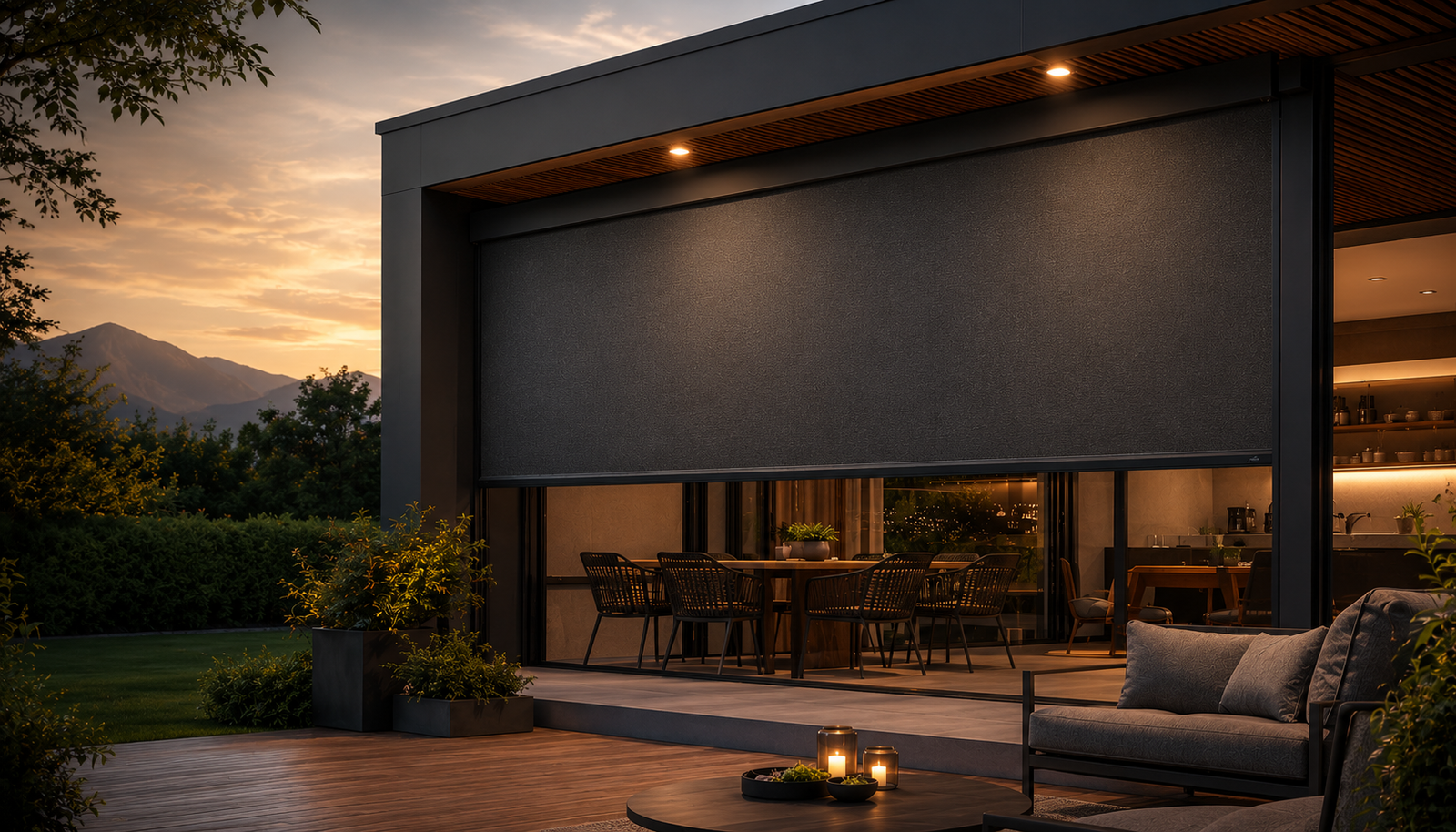
From motorized curtains in Gurgaon to ZIP screens on Noida balconies and rolling shutters in Delhi shops, tubular motors are widely used to automate products that move up, down or around a tube. They are compact, quiet and easy to hide after installation.
In this tubular motor buying guide, we’ll explain what a tubular motor is, how it works, its types, uses, installation, maintenance and how to choose the right one.
02 definition
What is a Tubular Motor?
A tubular motor is a compact, cylindrical electric motor designed to fit inside the hollow roller tube of curtains, blinds, shutters, and awnings. It rotates the tube to raise, lower, open, or close the connected fabric, slats, or shutter while remaining hidden inside the system.
The motor, gearbox, and control electronics are housed within a single sealed cylinder, typically available in different diameters to match the roller tube. A drive wheel, called a crown, connects the motor to the inner wall of the tube, while the opposite end is secured with a support bracket. Depending on the model, tubular motors can operate through wired switches, remote controls, or smart-home systems.
in short
If the motor is installed inside the roller tube and remains hidden after installation, it is a tubular motor. Unlike external motors, it provides a compact and efficient automation solution for shading systems.

02 definition
What is a Tubular Motor?
A tubular motor is a compact, cylindrical electric motor designed to fit inside the hollow roller tube of a curtain track, blind, shutter or awning. Instead of sitting outside the system as a separate unit — rotating the tube or roll fabric, slats or a shutter up or down.
The motor, gearbox, and a control electronics are all housed in a single sealed cylinder, typically between 35mm and 70mm in diameter, matched to the tube it sits inside. A drive wheel called a crown at one end grips the inner wall of the tube, while the other end is held by a support bracket wired to the mains or a battery.
in short
If the motor is hidden inside the roller barrel and you never see it once installed, it’s a tubular motor. If it’s a separate boxed unit bolted to a wall or gate post, that’s a different category — a sliding or swing gate motor.
03 Mechanism
How Does a Tubular Motor Work?
A tubular motor converts electrical power into controlled rotational movement, then stops precisely at the top and bottom of travel. Four components work together inside the tube:
WALL SWITCH
(BUILT-IN)
(TORQUE OUTPUT)
ENCODER
ROTATES
WALL SWITCH
(BUILT-IN)
(TORQUE OUTPUT)
ENCODER
ROTATES
Command Received – A signal from a remote, wall switch or app tells the motor to move up, down, or to a preset position.
Motor Engages – An AC or DC motor inside the tube starts turning, powered by mains electricity, a rechargeable battery, or a small solar panel.
Gearbox Reduces Speed, Increases Torque – A planetary or worm gearbox reduces the motor’s high-speed rotation down to slower, higher-torque rotation suitable for lifting fabric or slats.
Tube Rotates Through the Drive Adapter – The gearbox output turns the drive adapter, which engages with the roller tube and transfers torque to rotate the tube, winding or unwinding the curtain, blind or shutter.
Limit Switch Stops Travel – A mechanical limit switch or electronic sensor detects the preset upper and lower limits and stops the motor automatically, preventing over-travel or damage.
Most motors also include thermal cut-offs protection, which stops the motor if it overheats from prolonged use, and many mid-to-high-end models add obstacle detection that reverses the motor if it meets unexpected resistance.
04 classification
Types of Tubular Motors Based on Application
01. Tubular Motor for Blinds
Tubular motors for blinds are designed to automate the opening and closing of roller blinds, shades and other window-covering systems. The compact motor fits inside the roller tube and rotates the blind smoothly with minimal noise.
They can be operated using a wall switch, remote control or smart home system, depending on the motor configuration. These motors are particularly suitable for homes, offices, hotels and spaces where convenient light and privacy control is required.

02. Tubular Motor for Awnings
Tubular motors for awnings provide the power needed to extend and retract motorized awnings. They are designed to deliver sufficient torque to move larger fabric coverings while maintaining controlled and smooth operation.
Motorized awning systems can be operated using a remote, wall switch or automated control system, making them convenient for residential and commercial outdoor spaces.

03. Tubular Motor for Shutters
Tubular motors for shutters are designed for applications where the motor needs to move heavier roller shutters or similar coverings. They are installed inside the shutter tube and use the motor’s torque to raise and lower the shutter.
Depending on the system, these motors can include mechanical or electronic limit settings to control the upper and lower stopping positions. They are commonly used for residential, commercial and security-oriented shutter systems.

05 selection
How to Choose the Right Tubular Motor
1. Calculate the torque you actually need
The most crucial specification is torque (Nm). Oversized motors waste money and make unnecessary noise, whereas undersized motors strain, overheat and break early. A straightforward formula that works:
TORQUE FORMULA
Required Torque (Nm) = Total Assembly Weight (Kg) x Tube Radius (m) x 9.8, then add a 20-30% safety margin for friction and ageing. Always round up to the next available motor size — never round down.
2. Match the tube diameter
Tubular motors come in standard diameter — commonly 35mm, 45mm and 58mm/70mm for heavier shutters. The motor’s crown must match the internal diameter of your specific roller tube.
3. Decide on power source
Mains-wired AC motors suit permanent installs with accessible wiring. Battery or solar DC motors suit retrofits, rentals, or locations without nearby power points.
4. Pick a control type that fits your routine
A basic RF remote is enough for most homes. If you want scheduling, voice control, or integration with a broader smart home setup, choose a Wi-Fi or Zigbee-enabled motor with app support.
5. Check the IP rating for outdoor use
For awnings, outdoor ZIP screens and pergola blinds exposed to Delhi NCR’s monsoon and dust, look for an IP44 rating or higher — this protects the internal electronics from moisture and dust entering inside the motor.
6. Confirm duty cycle and warranty
Duty cycle indicates how long the motor can run continuously before it needs to cool down — important for frequently used shutters. A 4-minute continuous rating covers most residential and light commercial use. Always confirm the warranty period and whether local service support is available before buying.
This tubular motor buying guide will help you compare the key specifications before choosing a motor for your application.
06 Accessories
Tubular Motor Accessories
RF Remote Controls
Single-channel remotes for one motor or multi-channel remotes for controlling several curtains, blinds or shutters together.
Wall Switches & Panels
Fixed wired or RF wall-mounted switches that provide convenient and reliable control of motorized systems.
Wi-Fi / Zigbee Smart Bridges
Connect compatible motors to your smart home for app control, scheduling and voice assistant integration.
Sun & Wind Sensors
Automatically operate awnings or ZIP screens based on sunlight intensity and wind conditions.
Rain Sensors
Detect rainfall and automatically operate compatible skylight shades or awnings when required.
Crowns & Tube Adapters
Drive-end fittings designed to match different tube diameters and motor applications.
Idle End Caps & Support Brackets
Essential mounting hardware that supports the roller tube and securely holds the complete assembly.
Battery Packs & Solar Panels
Alternative power solutions for compatible DC motors, including rechargeable batteries and solar charging.
07 benefits
Advantages of Tubular Motor
Fully Concealed
Sits entirely inside the roller tube — no external motor housing or visible wiring.
Quiet Operation
Planetary gearboxes keep most models in the 35-45 dB range, barely audible in daily use.
Space-Saving
No external unit means no extra wall or ceiling clearance is needed for installation.
Precise Positioning
Electronic limits and encoders allow accurate stop points and even mid-travel presets.
Smart Home Ready
Many models integrate directly with app control, voice assistant and automation routines.
Low Maintenance
Sealed construction and few moving parts means minimal upkeep over year of use.
08 pricing
Tubular Motor Price in India
As part of this tubular motor buying guide, it is also important to understand how torque rating, brand, control type and IP protection affect prices in India.
CATEGORY
TORQUE RANGE
APPROX. PRICE (INR)
Standard RF Blind Motor
20-30 Nm
₹8,000 – ₹18,000
Heavy-duty Shutter Motor
50-100 Nm
₹25,000 – ₹40,000
Premium Wi-Fi / app Controlled Motor
20- 40 Nm
₹10,500 – ₹20,500
What pushes the price up within a torque brand: Wi-Fi/Zigbee connectivity over basic RF, a higher IP rating for outdoor use, electronic versus mechanical limit setting and warranty length backed by genuine after-sales support. Treat the cheapest option with caution — a low-cost motor that fails in 18 months, mid-wall, usually costs more in repair labour than a slightly pricier unit that lasts a decade.
09 setup
Installation & Maintenance
Installation Overview
Confirms the motor’s crown matches your roller tube’s internal diameter before inserting it.
Slide the motor into the tube and secure the drive the-end and idle-end support brackets on the wall or frame.
Connect the motor’s power cable — to mains wiring for AC units, or charge the battery/connect the solar panel for DC units. Mains wiring should always be done by a licensed electrician.
Set the upper and lower travel limits, either mechanically via the end-cap screw or electronically through the remote or app.
Pair the remote, wall switch or smart hub, and test full travel in both directions before final fitting of the fascia or covers.
professional install recommended
While tube insertion is simple, bracket alignment, electrical wiring and limit calibration directly affect motor lifespan and warranty validity. KODE’s installation teams handle this as standard across Delhi NCR.
Maintenance Tips
Wipe down the tube and fabric periodically to prevent dust build-up from adding load to the motor, especially important given Delhi NCR’s dust level.
Recheck upper and lower limits every few months, as brackets and fabric can shift slightly over time.
For outdoor units, inspect end caps and seals before monsoon season to ensure moisture is not reaching the motor housing.
Avoid manually forcing a motorized blind or shutter — this can damage the internal gearbox or limit switch.
For AC motors, have wiring and capacitors checked every 3-4 years as part of routine electrical maintenance.
09 setup
Installation & Maintenance
Installation Overview
Confirms the motor’s crown matches your roller tube’s internal diameter before inserting it.
Slide the motor into the tube and secure the drive the-end and idle-end support brackets on the wall or frame.
Connect the motor’s power cable — to mains wiring for AC units, or charge the battery/connect the solar panel for DC units. Mains wiring should always be done by a licensed electrician.
Set the upper and lower travel limits, either mechanically via the end-cap screw or electronically through the remote or app.
Pair the remote, wall switch or smart hub, and test full travel in both directions before final fitting of the fascia or covers.
professional install recommended
While tube insertion is simple, bracket alignment, electrical wiring and limit calibration directly affect motor lifespan and warranty validity. KODE’s installation teams handle this as standard across Delhi NCR.
Maintenance Tips
Wipe down the tube and fabric periodically to prevent dust build-up from adding load to the motor, especially important given Delhi NCR’s dust level.
Recheck upper and lower limits every few months, as brackets and fabric can shift slightly over time.
For outdoor units, inspect end caps and seals before monsoon season to ensure moisture is not reaching the motor housing.
Avoid manually forcing a motorized blind or shutter — this can damage the internal gearbox or limit switch.
For AC motors, have wiring and capacitors checked every 3-4 years as part of routine electrical maintenance.
10 Why choose us?
Why Choose KODE?
KODE India supplies and installs tubular motor systems for blinds, shutters and outdoor screens across Delhi NCR — Backed by the same engineering standards behind our gate automation range.
Locally Stocked
Torque ranges and control types kept in stock for fast turnaround across Delhi, Gurgaon, Noida & Ghaziabad.
Trained Installers
In-house technicians handle wiring, bracket alignment, and calibration — not third-party contractors.
Monsoon-Ready Builds
Outdoor-rated units and installation practices suited to Delhi NCR's dust and monsoon conditions.
Genuine Warranty Support
Documented warranty backing with local service — not an import with no after-sales presence.
Smart Home Integration
Wi-Fi and app-enabled motor options that fit into wider home automation setups.
One Vendor, Full Scope
From gate automation to curtains and shutters — a single point of contact for the property.
11 FAQs
Frequently Asked Questions
Ready to Automate Your Blinds & Shutter Systems?
Use this tubular motor buying guide to choose a high-performance solution engineered for quiet operation, efficiency and long-lasting reliability.